
Swimming Pilates: Simple Guide to Getting Stronger in Water
Introduction
Swimming Pilates combines two exercises that work perfectly together. Pilates builds core strength, improves flexibility, and fixes posture on land. Swimming gives you cardio exercise in water. When you do both, you swim faster with better technique while building stronger muscles.
The Pilates “swimming” exercise mimics swimming movements on a mat, strengthening your back, shoulders, and legs without equipment. Together, they create the perfect workout routine for swimmers of all ages.
Getting Stronger in Water
Have you ever wondered why some swimmers glide through water effortlessly while others struggle? The secret often isn’t more pool time—it’s what happens on dry land. Many competitive swimmers and fitness enthusiasts discovered that combining swimming with Pilates transforms their performance in ways pure swimming practice never could.
Swimming Pilates represents the perfect partnership between water and land training. Pilates exercises strengthen the exact muscles swimmers use most—the core, back, shoulders, and hips. Meanwhile, swimming provides cardiovascular benefits that Pilates alone can’t deliver. This combination creates stronger, more efficient swimmers who avoid injuries and improve technique faster.
This guide explains everything about swimming Pilates—what it is, how it works, which exercises help most, and why swimmers at every level benefit from this partnership. Whether you’re training for competitions or swimming for fitness, you’ll learn practical ways to improve your performance starting today.
What Is Swimming Pilates?
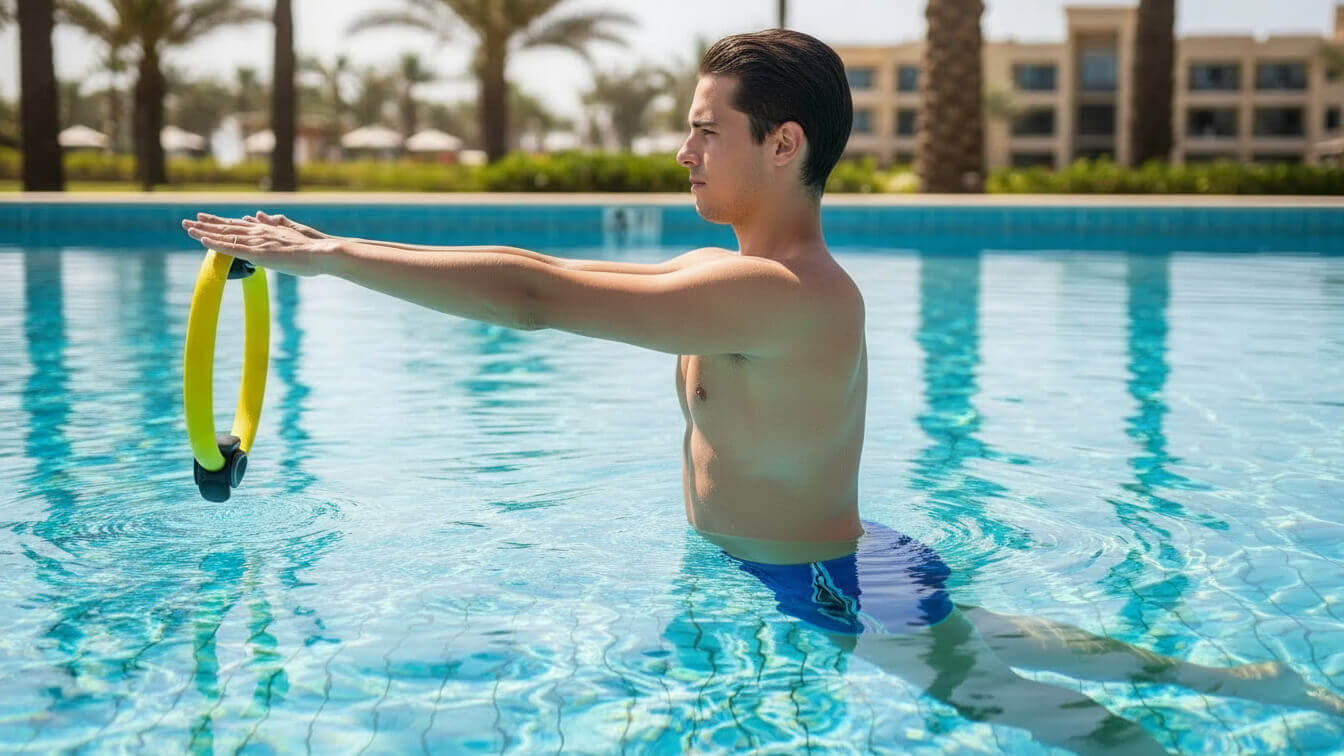
Swimming Pilates has two meanings that work together to make you a better swimmer.
- First Meaning – The Exercise: There’s a specific Pilates exercise called “swimming” that looks like swimming movements done on a mat. You lie face-down, lift your arms and legs, then flutter them like you’re swimming through air. This exercise strengthens your entire back, shoulders, glutes, and hamstrings without any equipment.
- Second Meaning – The Combination: Swimming Pilates also describes the practice of combining regular Pilates workouts with your swimming training. This combination creates better results than doing either activity alone.
Why the Name Makes Sense
Joseph Pilates created this exercise system in the 1920s. He included the “swimming” exercise because even then, people understood connections between land training and water performance. The movements mimic front crawl swimming, making it a natural preparation for pool work.
How It Looks in Action
Imagine lying on your stomach with arms stretched forward. You lift your chest, arms, and legs slightly off the ground. Then you flutter your opposite arm and leg together—right arm with left leg, then left arm with right leg. The motion looks exactly like swimming, except you’re supported by a mat instead of water.
Key Difference from Actual Swimming: In water, buoyancy supports your body weight. On land, your core muscles must work harder to maintain position while your limbs move. This extra challenge builds strength that translates directly to better swimming.
Benefits of Pilates for Swimmers
Research and professional swimming coaches identify specific ways Pilates improves swimming performance.
Core Strength for Better Swimming
Every swimming movement starts from your core—the muscles around your stomach, back, and hips. When you kick, your core stabilizes your body. When you pull water, your core transfers power from your arms through your body.
- What Pilates Does: Every Pilates exercise activates core muscles. The “hundreds” exercise makes your abs burn. Planks connect your whole body from head to heels. The swimming exercise strengthens your back while engaging your core for stability.
- Swimming Result: With a stronger core, you maintain better body position in water. Your hips stay higher, reducing drag. Your rotation becomes smoother during freestyle. Your kick generates more power because it originates from a stable center.
Improved Flexibility and Range of Motion
Swimmers need flexible shoulders to reach forward properly. They need mobile hips for efficient kicking. Tight muscles limit your stroke length and force awkward movements.
- What Pilates Provides: Pilates exercises stretch muscles while strengthening them. You work through full ranges of motion—shoulders rotating fully, spine extending and flexing, hips opening wide.
- Swimming Improvement: Better flexibility means longer strokes without strain. Your shoulders rotate freely during freestyle. Your hips move efficiently during breaststroke kicks. You maintain good technique even when tired because flexibility prevents compensation patterns.
Better Breathing Technique
Both Pilates and swimming emphasize coordinated breathing. In Pilates, you learn diaphragmatic breathing—deep breaths that engage your core muscles. In swimming, efficient breathing reduces energy waste and maximizes oxygen intake.
- The Connection: Pilates teaches you to coordinate movement with breathing. You inhale during certain phases, exhale during others. This control translates directly to swimming, where breathing rhythm determines your efficiency.
- Practical Benefit: Swimmers who practice Pilates report feeling less breathless during long sets. They coordinate breathing naturally with stroke cycles. They maintain relaxed, efficient breathing even during hard intervals.
Injury Prevention Through Balance
Swimming involves repetitive movements that can create muscle imbalances. Freestyle swimmers often develop tight shoulders and weak backs. This imbalance leads to shoulder injuries, the most common problem competitive swimmers face.
- How Pilates Helps: Pilates works opposing muscle groups equally. While swimming might overdevelop your chest and front shoulders, Pilates strengthens your back and rear shoulders. This balance prevents the muscle imbalances that cause injuries.
- Long-Term Advantage: Swimmers who add Pilates to their training miss fewer workouts due to injury. They extend their competitive careers longer. They maintain better posture both in and out of the water.
Streamline Position Mastery
The streamline position—body fully extended, arms overhead, completely straight—determines how efficiently you move through water. Even small breaks in streamline position create significant drag.
- Pilates Contribution: Exercises focusing on spine extension and lengthening train your body to hold streamlined positions naturally. The “swan” exercise and “swimming” exercise particularly develop this ability.
- Performance Impact: When you’re tired at the end of a race, technique usually breaks down first. Pilates trains your body to maintain proper position even under fatigue, preserving your streamline when it matters most.
The Pilates Swimming Exercise: Step-by-Step Guide
Let’s learn the classic Pilates swimming exercise that strengthens exactly what swimmers need.
Starting Position
Lie face-down on a yoga mat or exercise mat. Extend your arms straight forward, reaching toward the wall in front of you. Your legs stretch straight back, parallel to each other. Your forehead rests lightly on the mat.
Important Setup:
- Keep your shoulders away from your ears (don’t scrunch)
- Engage your core by pulling your belly button slightly toward your spine
- Point your toes behind you
- Create one long line from fingertips to toes
The Basic Movement
- Phase 1 – Lift: Slowly lift your chest, arms, and legs off the mat. Only lift as high as comfortable—maybe just 2-3 inches at first. Your forehead comes off the mat, but don’t look forward (this strains your neck). Instead, look down at the mat about 6 inches in front of you.
- Phase 2 – Flutter: Once lifted, begin alternating arm and leg movements. Lift your right arm and left leg higher while your left arm and right leg lower slightly. Then switch—left arm and right leg up, right arm and left leg down.
- Phase 3 – Breathing: Count your movements. Inhale for 5 flutter counts, exhale for 5 flutter counts. This breathing pattern is the same as the Pilates “hundreds” exercise.
Common Mistakes to Avoid
- Mistake 1 – Looking Forward: This compresses your neck vertebrae. Solution: Keep your gaze down, maintaining a neutral neck position.
- Mistake 2 – Lifting Too High: Forcing extreme back extension causes strain. Solution: Lift only as high as you can while keeping movements controlled and pain-free.
- Mistake 3 – Letting Core Relax: When your abs turn off, your lower back takes all the strain. Solution: Constantly engage your abdominal muscles throughout the exercise.
- Mistake 4 – Fast, Jerky Movements: Quick movements reduce effectiveness and increase injury risk. Solution: Make smooth, controlled flutter motions like swimming through thick honey.
How Long to Practice
- Beginners: Start with 30 seconds (about 50 total arm/leg movements). Rest. Repeat 2-3 times.
- Intermediate: Build up to 1 minute of continuous swimming. Aim for 3 sets with 30-second rests between.
- Advanced: Perform 2 minutes of continuous swimming with controlled breathing. Try 3-4 sets as part of your regular routine.
Other Pilates Exercises That Help Swimming
Beyond the swimming exercise, several Pilates movements particularly benefit swimmers.
The Hundred (Core Strengthener)
Lie on your back, lift your head and shoulders slightly, extend your arms by your sides, and pump them up and down while keeping your legs raised. This exercise builds abdominal endurance critical for maintaining good swimming posture.
Swimming Benefit: Strengthens the exact core muscles that keep your hips high in the water and prevent your legs from sinking.
Swan Dive (Back Extension)
Lie face-down, place your hands under your shoulders, then lift your upper body by extending through your spine. This strengthens back muscles while improving spinal flexibility.
Swimming Benefit: Creates the back strength needed to maintain proper head position during freestyle breathing and improves body rotation.
Rolling Like a Ball (Core Control)
Sit balanced on your tailbone with knees pulled to your chest, then roll backward and forward in a controlled motion. This improves body awareness and core engagement.
Swimming Benefit: Teaches the tight, compact body position needed for flip turns and underwater dolphin kicks.
Leg Circles (Hip Flexibility)
Lie on your back with one leg raised, then draw large circles in the air while keeping your pelvis stable. This improves hip mobility and core stability simultaneously.
Swimming Benefit: Increases the hip flexibility needed for efficient flutter kicks and breaststroke kicks while strengthening stabilizing muscles.
How to Combine Swimming and Pilates Training
Creating the right balance between pool work and Pilates maximizes benefits from both.
Weekly Schedule Example
Competitive Swimmers:
- Monday: Morning swim, Evening Pilates (30 minutes)
- Tuesday: Morning swim, Afternoon strength training
- Wednesday: Morning swim, Evening Pilates (30 minutes)
- Thursday: Morning swim, Rest evening
- Friday: Morning swim, Evening Pilates (45 minutes)
- Saturday: Long swim workout
- Sunday: Rest or light Pilates (20 minutes)
Fitness Swimmers:
- Monday: Pilates (30 minutes)
- Tuesday: Swimming (45 minutes)
- Wednesday: Rest or walk
- Thursday: Pilates (30 minutes)
- Friday: Swimming (45 minutes)
- Saturday: Combined – Pilates then swimming (15 min + 30 min)
- Sunday: Rest
Timing Your Workouts
- Before Swimming: A 10-15 minute Pilates warm-up activates core muscles and improves body awareness before entering the pool. Focus on gentle exercises like cat-cow stretches, leg circles, and breathing exercises.
- After Swimming: A 20-30 minute Pilates session after swimming works tired muscles in different ways, promoting recovery while building strength. This timing helps prevent the muscle imbalances swimming creates.
- Separate Days: On rest days from swimming, longer Pilates sessions (45-60 minutes) provide active recovery. Your cardiovascular system rests while you build the strength foundation for better swimming.
Which Type of Pilates to Try
Mat Pilates (Best for Beginners):
- Equipment needed: Just a mat
- Cost: Low (free YouTube videos or budget gym classes)
- Best for: Learning basic movements, building foundational strength
- Perfect if: You want flexibility to practice anywhere
Reformer Pilates (Advanced Option):
- Equipment needed: Specialized Pilates machine
- Cost: Higher (studio classes typically $25-40 per session)
- Best for: Targeted resistance training, rehabilitation
- Perfect if: You have specific weaknesses or injury history
Private Sessions (Fastest Learning):
- Investment: $75-150 per hour
- Benefit: Personalized instruction, immediate form corrections
- Best for: Serious competitors, injury recovery
- Consider if: You want the fastest improvement with proper technique
Swimming Pilates for Different Age Groups
The swimming Pilates combination works for everyone, but approaches differ by age.
For Kids and Teens (Ages 8-17)
Young swimmers building competitive skills gain enormous advantages from Pilates. Their bodies learn proper movement patterns before bad habits develop.
Focus Areas:
- Basic core strength (shorter, simpler exercises)
- Flexibility work (growing bodies need this)
- Body awareness (understanding how movement feels)
- Fun variations (make it engaging, not boring)
Sample Exercise: Instead of a full swimming exercise, start with “Superman holds”—lift arms and legs off the ground and hold for 10 seconds. Make it a game: “How long can you fly?”
For Adults (Ages 18-50)
Adult swimmers often bring years of muscle imbalances from desk jobs or previous sports. Pilates corrects these while improving swimming.
Focus Areas:
- Correcting posture problems from sitting
- Building core strength lost to inactive lifestyles
- Increasing flexibility in the tight shoulders and hips
- Developing breathing awareness is often lost to stress
Realistic Expectations: Adults need 4-6 weeks of consistent Pilates practice before noticing swimming improvements. Patience pays off with injury prevention and better technique.
For Masters Swimmers (Ages 50+)
Older swimmers face different challenges: maintaining flexibility, preventing injuries, and preserving bone density. Pilates addresses all three.
Special Considerations:
- Lower impact modifications (smaller ranges of motion)
- Extra focus on shoulder health (rotator cuff strengthening)
- Bone density maintenance (Pilates provides weight-bearing stress, while swimming lacks)
- Balance and stability work (preventing falls outside the pool)
Modified Approach: Start with preparatory exercises like “fish” variations (arms at sides instead of overhead) before progressing to full swimming exercise. This reduces injury risk while building strength safely.
Common Questions Swimmers Ask About Pilates
How Soon Will I See Results?
Timeline:
- Week 1-2: Better body awareness during swimming
- Week 3-4: Improved core engagement, easier breathing
- Week 5-8: Noticeable technique improvements, less fatigue
- Week 9-12: Measurable time improvements, injury resilience
Results depend on consistency. Three 30-minute Pilates sessions weekly produce better results than one 90-minute session.
Can Pilates Replace Dryland Training?
Pilates complements but doesn’t completely replace traditional dryland training. Swimmers still need:
- Strength training (weights) for raw power
- Cardio work for endurance
- Sport-specific movements (starts, turns)
Best Approach: Use Pilates as 50% of your dryland program, combining it with traditional strength work.
What If I’m Not Flexible?
Perfect! Pilates helps inflexible people more than naturally flexible individuals. You’ll gain flexibility while building strength—the ideal combination.
Starting Point: Everyone begins at different flexibility levels. Pilates exercises include modifications for tight muscles. Your flexibility improves gradually with consistent practice.
Does It Help With Backstroke Too?
Yes! While the swimming exercise mimics freestyle, the core strength, flexibility, and body awareness Pilates develops improve all strokes—backstroke, breaststroke, butterfly, and freestyle.
Specific Benefits:
- Backstroke: Better core stability keeps hips high
- Breaststroke: Hip flexibility improves kick efficiency
- Butterfly: Back and core strength support powerful undulation
- Freestyle: Everything combines for optimal stroke
Scientific Evidence Supporting Swimming Pilates
Research confirms what swimmers experience in practice.
Study Findings
A 2019 study published in the Journal of Sports Science & Medicine examined competitive swimmers who added Pilates to their training. Results showed:
- 15% improvement in core strength tests after 8 weeks
- 12% increase in shoulder flexibility
- 8% reduction in shoulder pain complaints
- Subjective improvements in “swimming feel” and technique
Expert Opinions
Jessica Platt, certified Pilates instructor and Master’s swimmer, explains: “Pilates focuses on strengthening the core, increasing flexibility and mobility, lengthening the spine, and working on postural alignment. As a master’s swimmer myself, I have found my posture in the water has a direct impact on my body position in the water, which then affects my stroke and speed.”
Professional swimming coaches increasingly recommend Pilates as essential cross-training, particularly for preventing the shoulder overuse injuries common among high-volume swimmers.
Getting Started Today
Ready to try swimming Pilates? Here’s your action plan.
Week 1: Learning Basics
- Day 1-2: Watch 2-3 beginner Pilates videos showing proper form for the swimming exercise. Practice the starting position without movement—just holding the lifted position for 10 seconds.
- Day 3-4: Try 3 sets of 20-second swimming exercise with 30-second rests. Focus entirely on form, not intensity.
- Day 5-7: Add 2-3 additional Pilates exercises (hundred, swan, leg circles) for a complete 15-minute routine.
Week 2: Building Consistency
Increase swimming exercise duration to 30 seconds per set. Add a second daily session if energy permits. Notice how your swimming feels—you should sense better core engagement.
Week 3-4: Creating Habits
Establish specific times for Pilates—before swimming, after dinner, or first thing in the morning. Consistency matters more than duration. Three 20-minute sessions beat one 60-minute session weekly.
Finding Resources
Free Options:
- YouTube Pilates channels (search “beginner Pilates for swimmers”)
- Swimming club team, Pilates sessions
- Local gym Pilates classes (often included in membership)
Paid Options:
- Pilates apps ($10-20/month with hundreds of classes)
- Private sessions ($75-150/hour for personalized instruction)
- Studio group classes ($20-40 per session)
What Works Best: Start with free YouTube videos to learn the basics. If you love it and want faster progress, invest in occasional private sessions to perfect technique, then return to independent practice.
Conclusion
Swimming Pilates represents one of the smartest training combinations for swimmers at any level. The partnership between these disciplines creates stronger, more efficient, injury-resistant athletes.
Remember These Essentials:
- Core Strength Matters Most: Every swimming improvement starts with a stronger core that Pilates develops specifically
- Consistency Beats Intensity: Three 30-minute Pilates sessions weekly produce better results than random, intense workouts
- Form First, Duration Second: Perfect technique in a 20-second swimming exercise beats sloppy form for 2 minutes
- Patience Pays Off: Allow 4-8 weeks to notice real swimming improvements from Pilates practice
- Combinations Work Best: Pilates complements but doesn’t replace swimming—together they create the perfect workout routine
Whether you’re training for the Olympics or swimming for fitness, swimming Pilates offers proven benefits supported by research and professional swimmers worldwide. Start with just 15 minutes today, and you’ll soon understand why swimmers everywhere call Pilates their secret weapon.
Frequently Asked Questions
What is the Pilates swimming exercise?
The Pilates swimming exercise is a mat workout where you lie face-down, lift your arms and legs off the ground, then flutter them alternately like swimming motions. Your right arm lifts with your left leg, then you switch sides continuously. This exercise strengthens your entire back, core, shoulders, glutes, and hamstrings without any equipment. It mimics swimming movements, making it perfect preparation for pool workouts while building the exact muscles swimmers need most.
How often should swimmers do Pilates?
Swimmers should do Pilates 2-4 times weekly for optimal results. Competitive swimmers training 6 days weekly benefit from 3-4 short Pilates sessions (20-30 minutes) on swimming days or rest days. Fitness swimmers working out 3-4 times weekly should add 2-3 Pilates sessions (30-45 minutes). More isn’t always better—quality and consistency matter more than quantity. Even 15-20 minutes of focused Pilates three times weekly produces noticeable swimming improvements within 4-6 weeks.
Can beginners do the Pilates swimming exercise?
Yes, but start with modifications. Complete beginners should begin with “fish” variations where arms stay by your sides instead of overhead, reducing difficulty. Hold the lifted position for 10 seconds without movement, building strength before adding arm/leg flutter. Progress gradually: first master static holds, then add slow alternating movements, finally work up to the full swimming exercise with proper breathing. Everyone starts somewhere—even Olympic swimmers once struggled with basic Pilates movements.
Does Pilates improve swimming speed?
Yes, indirectly but significantly. Pilates doesn’t make you faster in the way sprint training does, but it improves efficiency, which translates to speed. Stronger core muscles maintain a better body position, reducing drag. Improved flexibility increases stroke length. Better breathing technique reduces energy waste. Together, these improvements typically produce 5-10% speed gains over 8-12 weeks for swimmers adding consistent Pilates practice. The benefits compound over time as injury prevention keeps you training consistently.
What equipment do I need for swimming Pilates?
For basic Pilates swimming exercises, you only need a yoga mat or exercise mat (about $15-30). That’s it! Mat Pilates requires no other equipment, making it accessible for everyone. As you advance, optional additions include resistance bands ($10-15), small hand weights (2-5 pounds, $10-20), or a Pilates ball ($15-25). Reformer Pilates uses a specialized machine found in studios, but this isn’t necessary for swimmers—mat exercises provide all the benefits you need for improving swimming performance.