
Stumps Meaning in Cricket: Definition, Role, Types & Full Guide
Stumps meaning in cricket is one of the most commonly searched phrases among beginners trying to understand how cricket equipment, terminology, and dismissals actually work. Many new fans get confused between stumps, wickets, bails, and related cricket terms. This article breaks everything down in a simple, human-friendly way and covers every angle your competitors missed—from stump technology to stump alignment issues, myths, tactical use, and modern innovations that changed the game.
This is the most complete, easy-to-read guide on the internet for anyone who wants to understand exactly what stumps are, how they work, why they matter, and how they shape cricket strategies.
What Are Stumps in Cricket? (Primary Definition)
In cricket, stumps are the three vertical wooden posts planted at each end of the pitch. Together with the two bails placed on top, they form the wicket. When the wicket is legally “put down,” it usually results in a dismissal, which is why stumps are such a vital part of the game.
Difference Between Stumps and Wicket
Many people confuse these terms, so here’s the simplest explanation:
| Term | Meaning | Includes |
| Stumps | The three vertical wooden posts | Only the posts |
| Wicket | The complete structure used during dismissals | Stumps + bails |
| Bails | The two small wooden pieces placed on top of the stumps | Not part of stumps by themselves |
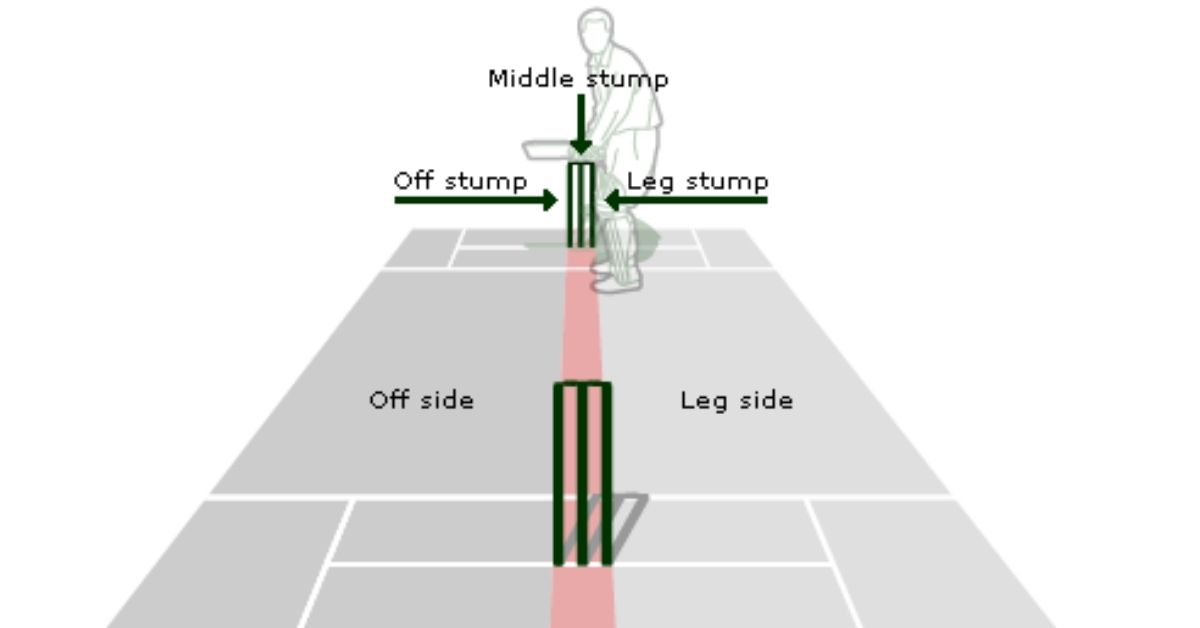
Naming of the Three Stumps
Each stump has a name and purpose:
- Off stump – closest to the off side of the batter.
- Middle stump – center stump; key for bowlers targeting stump-to-stump bowling.
- Leg stump – closest to the batter’s legs.
Understanding their names helps players read bowling lines, judge LBW chances, and set fielding strategies.
Complete Specifications of Cricket Stumps
According to the MCC Laws of Cricket, the official specifications are precise and standardized across the world.
Official Measurements (Table)
| Specification | Measurement |
| Height of each stump | 28 inches (71.1 cm) |
| Total width of wicket | 9 inches (22.86 cm) |
| Typical stump diameter | 1.38 inches (3.5 cm) |
| Number of stumps per wicket | Three |
| Total stumps on a pitch | Six |
Materials Used
Traditional stumps are made of durable hardwood, typically:
- Ash wood
- Maple wood
These materials provide the strength needed to withstand fast deliveries and impacts.
Construction Details
A stump has:
- A spike at the bottom so it can be firmly inserted into the ground.
- A U-shaped groove on top to support the bails.
- Smooth finishing so the ball does not deflect unusually.
Types of Cricket Stumps Used Today
Modern cricket uses different types of stumps depending on the level of play, broadcasting requirements, and conditions.
1. Traditional Wooden Stumps
Used in local matches, training sessions, and many domestic games.
2. LED Stumps & Zing Bails
Introduced to improve umpiring decisions and entertainment value. These stumps light up as soon as the bails are dislodged, improving decision accuracy.
3. Practice & Training Stumps
Often lightweight, single-piece, or spring-loaded to improve durability for repeated use.
4. Indoor Cricket Stumps
Made from plastic or rubber for safety and quick portability.
Stump Technology: LED Stumps, Stump Cam & Stump Mic
LED Stumps and Zing Bails
These innovative stumps contain:
- Sensors
- Microprocessors
- LED strips
They flash instantly when contact is made—down to milliseconds—helping umpires decide whether the bat or ball touched first during close run-out or stumping moments.
Stump Cameras
Tiny cameras placed inside stumps provide:
- Close-up shots
- Ultra-low angle replays
- Dramatic bowled and stumped visuals
Stump Microphones
You may have heard faint bat taps or players talking—this is thanks to stump mics, used heavily in international broadcasting.
Role of Stumps in Cricket Gameplay
Stumps are essential for dismissals and influence every bowler, batter, fielder, and umpire decision.
Dismissals That Involve Stumps
The wicket must be “put down” to dismiss the batter. This includes:
- Bowled – ball hits stumps and dislodges bails.
- Stumped – wicketkeeper removes the bails when batter leaves the crease.
- Run out – fielder breaks stumps while batter is outside crease.
- Hit wicket – batter accidentally hits stumps with bat or body.
Each of these depends on stump position, displacement, and the bails falling correctly.
What It Means to “Put Down the Wicket”
A wicket is considered down when:
- The bails fall from the stumps, or
- A stump is completely uprooted, even if bails remain intact.
This distinction is crucial because sometimes a ball brushes the bails lightly without removing them—meaning the batter is NOT out.
Cricket Terminology Related to Stumps
Cricket uses many stump-related terms that confuse beginners. Here’s a simple breakdown.
Calling Stumps
Means ending the day’s play in Test cricket. Umpires literally remove the bails or stumps to signal that play is over.
At Stumps
A phrase used in scorecards. Example:
India were 302–5 at stumps. This simply means the day ended with India on 302 runs for 5 wickets.
Draw Stumps
An idiomatic expression meaning to stop playing or to finish an activity—taken from cricket tradition.
Stump-to-Stump Bowling
A consistent bowling line targeting the stumps, designed to:
- Force LBW chances
- Keep batter defensive
- Hit the top of the off stump
This strategy is especially effective in Test matches and helpful on slow, low pitches.
Placement and Alignment of the Stumps
Ground staff place stumps precisely using alignment tools so that each stump forms a perfect wicket in position and direction.
A misaligned stump can affect:
- LBW decisions,
- Ball-tracking accuracy,
- Pitch angles, and
- Stump-to-mat alignment in indoor cricket.
Alignment Issues
In rare cases, slightly shifted stumps may cause:
- Wrong LBW predictions
- Misleading DRS angles
- Edge-case run-out or stumping misjudgments
Matches have paused briefly in international cricket to reset misaligned stumps—an important but rarely discussed detail.
Stumps in Different Cricket Formats
Test Cricket
Known for “calling stumps,” “at stumps,” and “stumps on Day 1, Day 2…” LED stumps are optional but commonly used in televised matches.
ODI and T20
LED stumps and zing bails are widely used because:
- They improve spectator experience
- They help umpires make quicker decisions
- They look dramatic under floodlights
Domestic Leagues
Leagues like PSL, IPL, BBL, and The Hundred use LED stumps as a broadcasting standard.
Evolution & History of Cricket Stumps
Originally, cricket had only two stumps. However, bowlers often complained that balls would pass between them without hitting anything. In 1775, a third stump—the middle stump—was added after bowler Edward Stevens bowled repeatedly through the two-stump gap.
Timeline of Stump Innovations
| Year | Innovation |
| Pre-1775 | Cricket used only 2 stumps |
| 1775 | Middle stump introduced |
| 1800s | Hardwood standardization |
| 20th century | Painted stumps adopted |
| 1990s | First stump cameras (limited use) |
| 2010s | LED stumps & zing bails introduced |
| Today | Smart stumps, sensors & broadcast integration |
This evolution shows how cricket equipment adapts to improve fairness and entertainment.
How Stumps Influence Bowling and Batting Strategy
Cricket stumps shape multiple tactical decisions across the game.
Why Bowlers Target the Stumps
- Improve LBW chances
- Force batter to play every delivery
- Reduce scoring options
- Hit the “corridor of uncertainty”
Bowlers aiming at off stump or middle stump often create dismissals like bowled or LBW.
Batter Awareness of Stump Positioning
Batters often take guard such as:
- Leg stump guard
- Middle stump guard
- Off stump guard
This helps them align their stance to the expected bowling line, especially in swing-friendly conditions.
Buying Guide for Cricket Stumps (Optional but Useful for SEO)
For clubs, academies, and schools choosing the right stumps:
- Select ash or durable hardwood for long-lasting use.
- Use LED stumps only if budget allows—they are expensive but great for match visuals.
- Training stumps with spring-back feature are ideal for net sessions.
- Always check height and diameter if purchasing non-certified stumps.
READ MORE >>> South Africa National Cricket Team: History, Squad & Records Guide
Common Myths & Misconceptions About Stumps
Many beginners believe things about stumps that aren’t true.
- Myth: If stumps shake, the batter is out. Truth: Bails must fall unless the stump is uprooted.
- Myth: LED bails fall more easily. Truth: They are actually heavier and sometimes do NOT fall easily.
- Myth: Stump-to-stump means bowling only middle stump. Truth: It refers to a consistent line targeting the wicket corridor.
- Myth: All formats use LED stumps. Truth: Many domestic matches still use wooden stumps.
Visual Diagram Explanation (Text-Based Version)
A simplified representation:
Bail
—————–
| | |
| | |
| | |
Off Middle Leg
Stump Stump Stump
This helps beginners visualize the stump positions on a pitch.
Frequently Asked Questions (FAQ)
How many stumps are there in cricket?
There are three stumps at each end of the pitch — six in total.
How tall are cricket stumps?
Each stump is 28 inches (71.1 cm) tall.
Why are there three stumps?
The third stump was added to prevent balls from going between the original two stumps.
Can a batter be out if the bails don’t fall?
Yes — if a stump is completely uprooted, even if bails remain intact.
What is the purpose of bails?
Bails make it easier to judge if the wicket has been “put down” during dismissals.
Are LED stumps used everywhere?
Mainly in international and major domestic leagues; they are expensive for small clubs.
Conclusion
Understanding stumps meaning in cricket is essential for any fan, beginner, or player wanting to learn the sport properly. From their structure and dimensions to their role in dismissals, strategies, technology, and terminology, stumps are far more than just wooden posts. They shape the rules, influence tactics, determine dismissals, and bring moments of high drama—especially when they go flying after a bowled delivery.
This complete guide has covered every angle: specifications, history, terminology, strategies, myths, buying guides, stump technology, and more. With this knowledge, you’ll understand cricket matches with far more clarity and appreciation.