
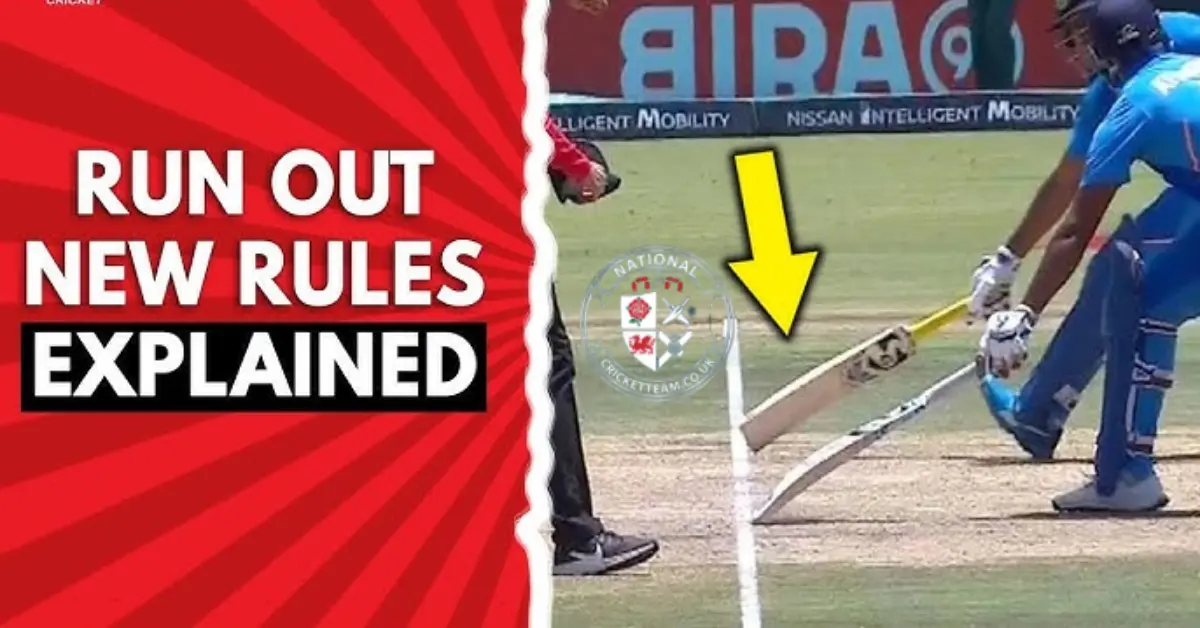
Run Out Laws of Cricket Law 38 Explained | Complete Guide 2025
The run out laws of cricket form one of the most important and misunderstood parts of the game. Whether you’re a new fan, a cricket student, or someone analysing match decisions, understanding Law 38 helps you recognise what truly counts as a run out, what doesn’t, and how MCC updates continue shaping match results across formats.
Cricket fans often search for clarity because many run-out decisions depend on split-second moments, LED bails timing, ball-in-play status, and whether the batter was grounded behind the crease. This guide simplifies everything in a friendly, easy-to-read style.
Understanding MCC Law 38 (Run Out)
The Marylebone Cricket Club (MCC) defines a run out as the dismissal of a batter when they are out of their ground and the wicket is fairly put down by the opposing side.
Law 38 revolves around three ideas:
- The ball must be in play
- The batter must be out of their ground
- The fielder must fairly break the stumps
According to MCC definitions, a batter is grounded when their bat or any part of their body touches the ground behind the crease line.
What Counts as a Legal Run Out
A run out is considered valid in the following situations:
- The batter attempts a run and fails to reach the crease
- A fielder throws directly onto the stumps
- A fielder breaks the wicket with the ball in hand
- The ball remains live after a deflection, misfield or overthrow
- The batter’s bat is in the air even if crossing the line
- The striker or non-striker is out of their ground while the wicket is put down
The law ensures that fielders must have clear control of the ball or cause the stumps to be broken with the ball touching them at the time of contact.
What Is NOT Considered Run Out
Several scenarios may look like run outs but are not legally valid:
- The ball becomes dead before the stumps are broken
- A fielder dislodges the bails without the ball
- The wicket is broken after the bowler obstructs the batter
- Equipment like a wicket-keeper’s helmet is used accidentally to break the stumps
- A fielder hits the stumps with a hand not holding the ball
- The umpire signals dead ball due to injury, boundary, or obstruction
These details often confuse viewers, which is why Law 38 emphasises fairness and clarity.
Difference Between Run Out and Similar Dismissals
Cricket has several dismissals that resemble run outs but follow different rules.
Run Out vs Stumping
A stumping occurs only when the wicket-keeper breaks the stumps with the batter out of the crease without attempting a run. A run out applies when the batter is attempting a run.
Run Out vs Hit Wicket (Law 35)
If a batter breaks the stumps themselves while playing a shot or setting off for a run, it is hit wicket, not run out.
Run Out vs Obstructing the Field
If a batter deliberately blocks a throw or fielder, the dismissal becomes obstructing the field, not run out.
Non-Striker Run Out (Mankad) – Law 38.3
The non-striker run-out, also known as Mankading, has been one of cricket’s most controversial topics. MCC clarified in the 2022 Code that this dismissal is completely legal and falls under Law 38.
A non-striker can be run out when:
- They leave the crease before the bowler releases the ball
- They back up too early
- The bowler removes the bails while the ball is in play
This update shifted Mankading from unfair play to a standard run-out rule.
MCC Quote: “A non-striker must remain in their ground until the instant the bowler would normally be expected to release the ball.”
Modern Updates and MCC Amendments
MCC has updated Law 38 multiple times for clarity and consistency.
Notable Amendments
| Year | Key Change |
| 2000 | Clarified grounding definition |
| 2017 | Mankad clarified under run out |
| 2019 | Revisions around fielder possession |
| 2022 | Mankad fully legalised, soft-signal removal impacts |
These updates ensure fairness across T20, ODI, and Test formats.
Examples of Common Run Out laws of Cricket Situations
1. Direct-Hit Run Out
A clean strike by the fielder knocks off the bails without needing to collect the ball again.
2. Running Between the Wickets Confusion
Batters often change direction or collide mid-pitch, causing split-second disadvantages.
3. LED Wickets and Bail Activation
A wicket is considered broken the moment the LED bails light up, even before they fall off completely.
4. Overthrow Run Outs
If batters attempt extra runs after an overthrow, they can still be dismissed provided the ball remains live.
Case Study: Famous Run-Out Moments
Case Study 1 – Ashwin vs Buttler (IPL 2019)
Ravichandran Ashwin dismissed Jos Buttler at the non-striker’s end. This incident triggered global debate, but MCC reaffirmed its legality.
Case Study 2 – Bairstow Run Out (Ashes 2023)
Jonny Bairstow was dismissed after wandering out of the crease. The umpire declared the ball in play, making the decision valid.
Case Study 3 – World Cup 1992 Mix-Up
In a dramatic match, a miscommunication between batters led to a match-changing run-out, showcasing how one moment alters momentum.
READ MORE >>> Namibia National Cricket Team vs Canada National Cricket Team Timeline
Umpiring and Third-Umpire Protocols
When a run-out decision is reviewed, umpires examine:
- Ball-in-play status
- LED bail lights activation frame
- Whether a fielder had control of the ball
- If the batter’s bat or body grounded fully
- Contact between ball and wicket
Umpires watch frame-by-frame using ultra slow-motion to ensure accuracy.
FAQs About Run Out Laws Of Cricket
Is a bat touching the line considered grounded?
No. The bat must touch behind the line.
Can a batter be run out if they drop the bat?
Yes, as long as some part of their body grounds behind the crease.
Are both bails required to fall?
No. If one bail is already off, the stump must be struck again to break the wicket.
Can the wicket-keeper use a helmet accidentally?
No. The bails must be removed using the ball or the hand holding the ball.
Rare and Unusual Run-Out Cases
- The ball stuck inside a fielder’s clothing
- Stumps broken with a bowler’s knee instead of the ball
- Batter celebrating early and leaving the crease
- Ball deflecting off a fielder into the stumps
All these still fall under Law 38 if the ball remains live.
Tips for Coaches and Young Players
To avoid run outs, coaches teach:
- Clear calling (“Yes”, “No”, “Wait”)
- Keeping the bat sliding on the ground
- Running through the crease, not stopping early
- Watching the fielder’s throwing arm
- Avoiding unnecessary backing up at non-striker’s end
These habits dramatically reduce dismissals.
Conclusion
Understanding run out laws of cricket Law 38 helps fans and players enjoy cricket with clarity. As cricket evolves, MCC continues refining rules to ensure fairness, accuracy, and sportsmanship.
A run out may seem simple, but it is shaped by technical details, umpiring precision, and real-time judgement. With modern technology, the law remains one of cricket’s most fascinating and decisive elements.