
Most Dangerous Batsman in the World: Legends, Stats & Fear Factor
Most dangerous batsman in the world is a phrase that instantly sparks debate among cricket fans, experts, and former players. Some associate danger with raw power, others with mental pressure, while many believe true danger lies in a batsman’s ability to change a match within minutes. In modern cricket, where formats vary and expectations shift rapidly, being “dangerous” is no longer just about scoring runs — it is about impact, fear factor, and control over the game.
This article takes a deep, data-backed, and human approach to identify what truly defines a dangerous batsman, how this concept has evolved, and who genuinely deserves the title across eras and formats.
What Does “Most Dangerous Batsman” Really Mean?
Before naming players, it is crucial to understand what dangerous actually means in cricketing terms. Many great batsmen score heavily, but not all of them are feared.
Great Batsman vs Dangerous Batsman
A great batsman is consistent, technically sound, and reliable.
A dangerous batsman, however, does something extra:
- He forces captains to change field placements
- He alters bowling plans
- He creates psychological pressure
- He can destroy momentum in a few overs
Danger is not about elegance alone — it is about disruption.
Core Criteria That Define a Dangerous Batsman
A batsman earns the label “most dangerous” when he consistently excels in the following areas:
- Strike Rate & Scoring Speed – How quickly runs are scored.
- Ability to Dominate Bowlers – Especially elite pace and spin.
- Match-Winning Impact – Not just runs, but decisive runs.
- Performance Under Pressure – Finals, run chases, knockout games.
- Fear Factor – The hesitation and defensive mindset he creates among opponents.
Why “Dangerous” Is Contextual
A batsman dangerous in T20 cricket may not be as threatening in Test matches. Conditions, pitch behavior, match situations, and even eras play a significant role. This is why format-wise analysis matters.
Evolution of the Most Dangerous Batsman Across Eras
Early Era – Technique and Authority
In early cricketing history, danger came from technical dominance and mental authority. Batsmen wore down bowlers session by session. Fear came from inevitability.
1990s–2000s – Rise of Aggression
This era changed the definition completely. Batsmen began attacking from ball one, especially in ODIs. Power hitting and fearless stroke play entered mainstream cricket.
Modern Era – Power, Innovation, and Analytics
Today’s dangerous batsman blends:
- Power
- Unorthodox shots
- Match awareness
- Data-driven shot selection
Scoops, reverse sweeps, ramp shots, and boundary acceleration define modern danger.
Top Contenders for the Most Dangerous Batsman in the World
Below are players consistently mentioned when discussing the most dangerous batsman in cricket history, supported by stats, impact, and fear factor.
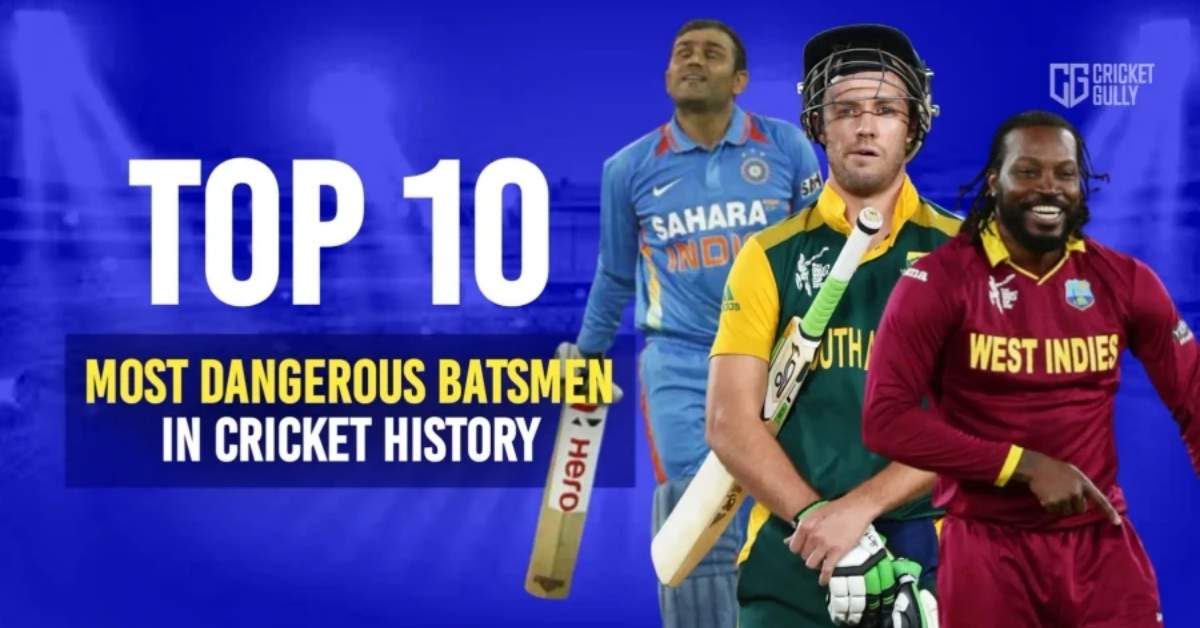
Chris Gayle – The Ultimate Power Destroyer
Chris Gayle is often the first name mentioned in this debate.
- Known as the Universe Boss
- Record holder for most sixes in international cricket
- Fastest T20 century
- Dominated bowlers across formats
Gayle’s ability to break bowling attacks mentally made him one of the most feared batsmen in the world, especially in T20 cricket.
“When Gayle is in full flow, there is no place to hide.” – Former international bowler
AB de Villiers – The 360-Degree Nightmare
AB de Villiers combined innovation with precision.
- Could score to any part of the ground
- Dominated pace and spin equally
- Exceptional strike rate under pressure
What made him dangerous was unpredictability. Bowlers never knew where the next shot would go.
Virender Sehwag – Fearless From Ball One
Sehwag redefined opening batting.
- Attacked even the best bowlers early
- Multiple triple centuries in Tests
- High strike rate in all formats
His danger came from complete disregard for reputation.
Viv Richards – Fear Before the Ball Was Bowled
Sir Viv Richards played without a helmet and with supreme confidence.
- Intimidated bowlers mentally
- Dominated fast bowling in hostile conditions
- Set the template for aggressive batting
Many legends still consider him the original dangerous batsman.
MS Dhoni – The Master of the Chase
Dhoni’s danger was situational.
- Ice-cold temperament
- Exceptional finisher
- Incredible record in run chases
Opposition teams feared him most in the last 10 overs.
Format-Wise Breakdown of the Most Dangerous Batsman
Most Dangerous Batsman in Test Cricket
In Tests, danger comes from:
- Sustained pressure
- Mental fatigue for bowlers
- Session-changing innings
Batsmen like Viv Richards, Virender Sehwag, and modern greats like Virat Kohli fit this mold.
Most Dangerous Batsman in ODI Cricket
ODIs demand balance between aggression and control.
- Ability to accelerate after consolidation
- High boundary percentage
- Match-winning centuries
Players like AB de Villiers, Rohit Sharma, and Sachin Tendulkar dominated this format with authority.
Most Dangerous Batsman in T20 Cricket
This is where danger is most visible.
- Powerplay destruction
- Death-over dominance
- Boundary acceleration
Chris Gayle, Jos Buttler, Glenn Maxwell, and modern T20 specialists excel here.
Most Dangerous Batsman in Franchise Leagues
Leagues like IPL, BBL, and PSL amplify danger due to pressure and crowd intensity. Consistency against global bowling attacks matters more than reputation.
Statistical Proof – Metrics That Make a Batsman Dangerous
Statistics alone do not tell the full story, but they support impact.
Strike Rate vs Batting Average
- Average shows consistency
- Strike rate shows damage
In limited-overs cricket, strike rate often defines danger.
Boundary Percentage and Six-Hitting Ability
A batsman who scores a large percentage of runs in boundaries:
- Shifts momentum
- Forces defensive fields
- Increases pressure instantly
Run-Rate Impact
Dangerous batsmen significantly increase run rate during their time at the crease.
Percentage of Team Runs Contributed
When a batsman scores 40–50% of the team’s runs, his value becomes undeniable.
Sample Comparison Table
| Player | Avg | Strike Rate | Sixes | Match Impact |
| Chris Gayle | High | Very High | Extreme | Explosive |
| AB de Villiers | High | Very High | High | Strategic |
| Virat Kohli | Very High | High | Moderate | Consistent |
Fear Factor – Why Bowlers Change Plans
Danger is not just statistical — it is psychological.
Psychological Pressure on Bowlers
- Short balls avoided
- Full lengths missed
- Defensive fields set early
Field Placements and Defensive Tactics
When captains spread the field prematurely, it is a sign of fear.
One Batsman, One Changed Strategy
Dangerous batsmen force teams to play reactively.
Most Dangerous Batsman in High-Pressure Situations
Run Chases
Players like Dhoni and Kohli thrive under chase pressure.
Finals and Knockouts
Danger increases when stakes are high. Big-match players define greatness.
ICC Tournaments
Consistency against top teams on global stages separates legends from stars.
Head-to-Head Dominance Against Elite Bowlers
Against Fast Bowlers
Strike rate against express pace shows true fearlessness.
Against Spin
Dominance against spin reflects footwork, patience, and power.
Matchups That Defined Danger
Certain batsmen consistently outperform specific bowling attacks, creating reputations that last decades.
Modern Cricket vs Classic Era – Who Was More Dangerous?
Rule Changes and Bat Technology
- Smaller boundaries
- Heavier bats
- Fielding restrictions
Why Comparing Eras Is Difficult
Each era has its own challenges. Danger must be judged relative to time.
Normalizing Stats Across Eras
Adjusting strike rates and averages provides fairer comparisons.
Who Is the Most Dangerous Batsman in the World Right Now?
In current cricket, danger depends on:
- Format
- Consistency
- Impact under pressure
Modern contenders combine power, technique, and adaptability, making this debate constantly evolving.
Expert Opinions and Legendary Quotes
“The most dangerous batsman is the one who makes bowlers second-guess themselves.” – Former international captain
“Fear is real in cricket. Some players create it just by walking in.” – Cricket analyst
READ MORE >>> Shreyas Iyer GF: Relationship Status, Dating Rumors & Truth
Common Myths About Dangerous Batsmen
Myth: High Strike Rate Alone Means Dangerous
Truth: Impact matters more than speed alone.
Myth: Only Power Hitters Are Dangerous
Reality: Intelligent batsmen can be equally destructive.
FAQs About the Most Dangerous Batsman in the World
Who is the most dangerous batsman in the world?
There is no single answer, as danger varies by format, era, and conditions.
What makes a batsman dangerous?
Strike rate, match impact, pressure performance, and fear factor.
Is strike rate more important than average?
In limited-overs cricket, strike rate often defines danger more clearly.
Who is the most feared batsman in cricket history?
Names like Chris Gayle, Viv Richards, and AB de Villiers are often cited.
Which format needs the most dangerous batsman?
T20 cricket values danger the most due to limited overs and high pressure.
Final Verdict – Who Truly Is the Most Dangerous Batsman in the World?
There is no universal answer — and that is what makes cricket beautiful. The most dangerous batsman in the world depends on format, era, and context. What remains constant is the ability to change games, intimidate opponents, and deliver when it matters most.
Danger is not just measured in runs — it is felt in silence, pressure, and moments that define history.